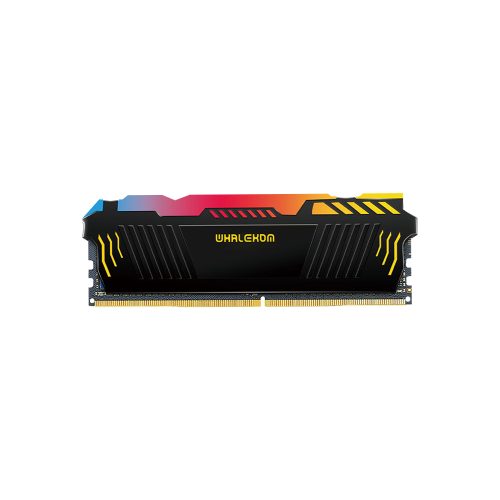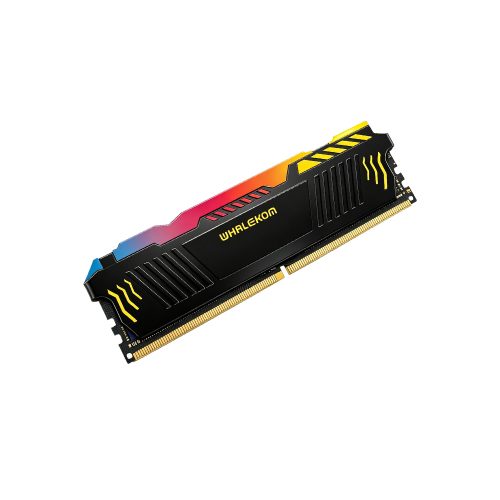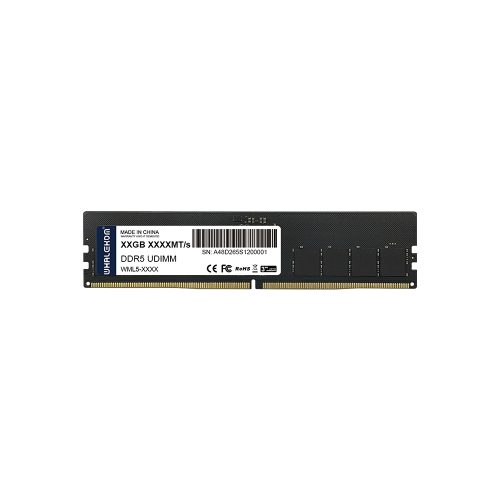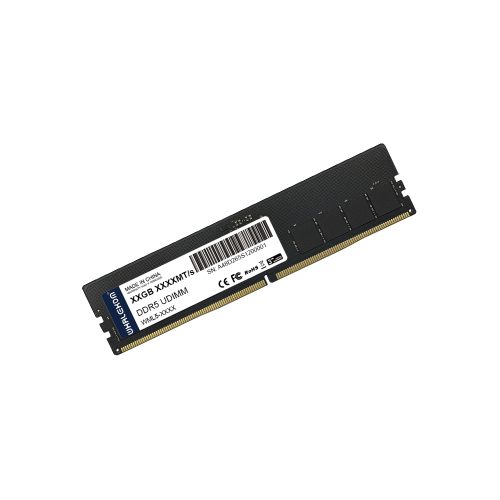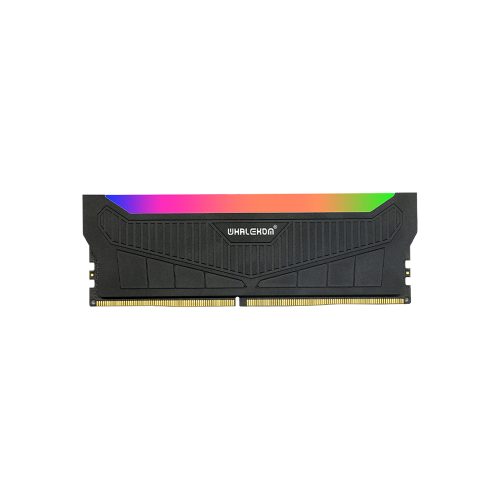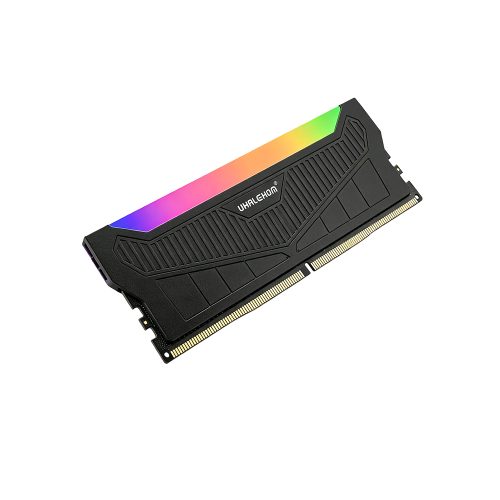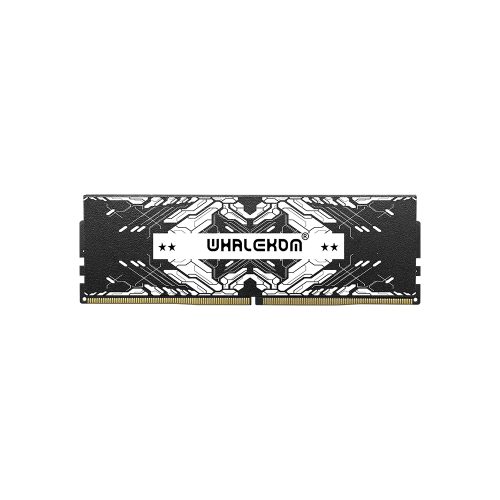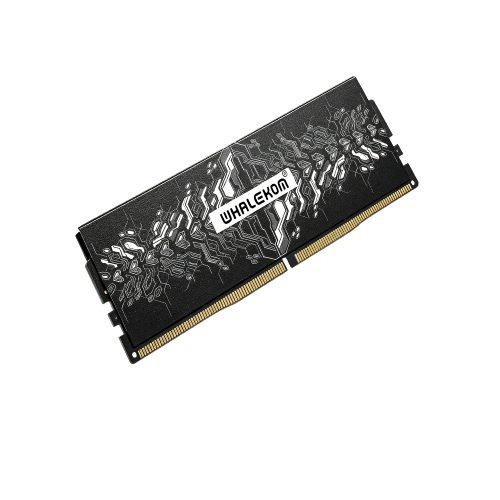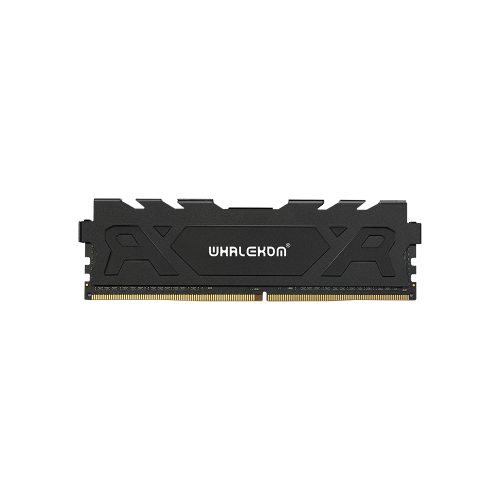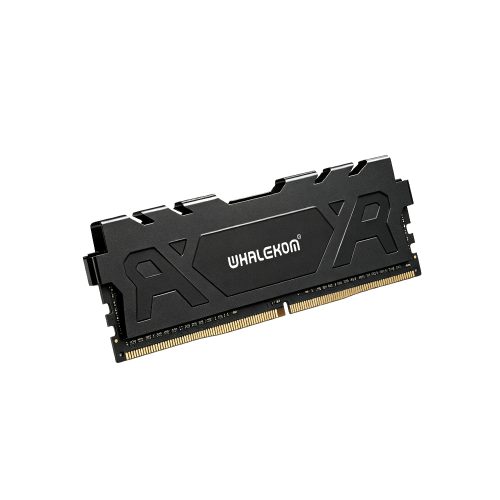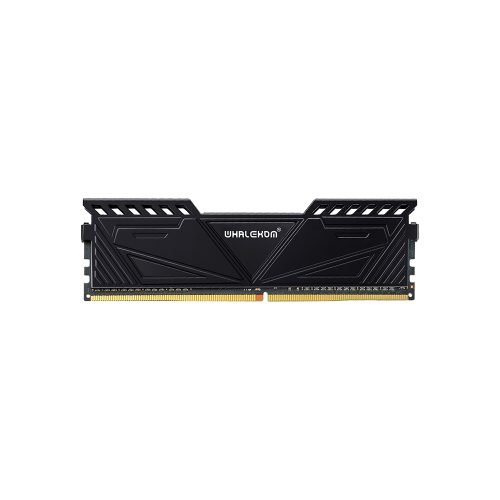
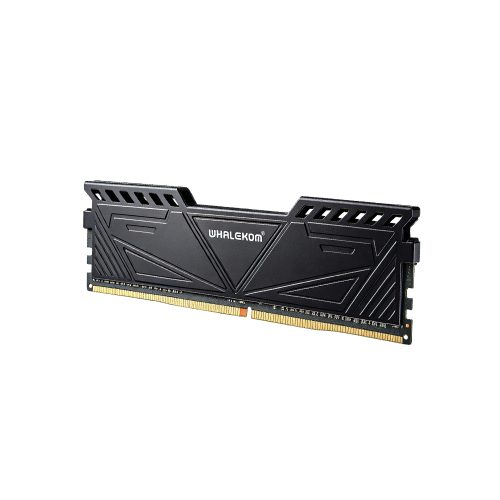
DDR4 Heatsink 32GB 3200MHz
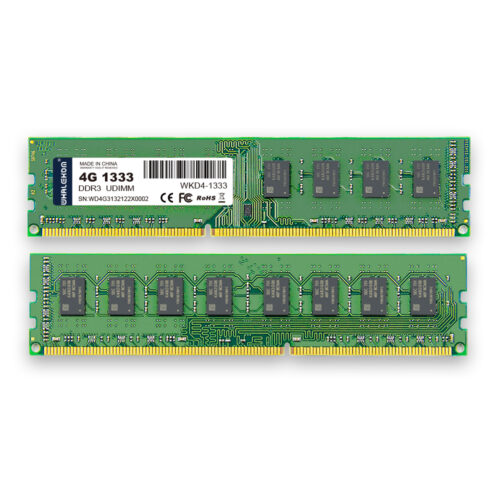
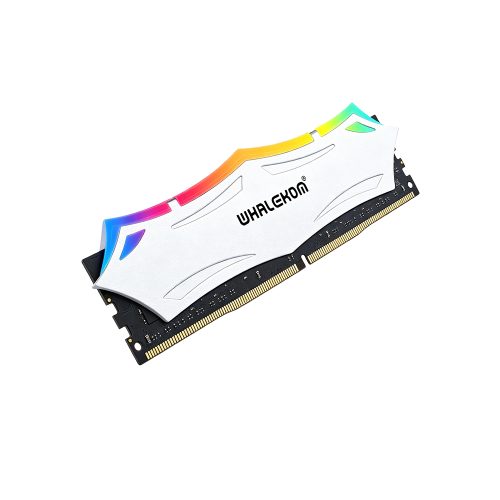
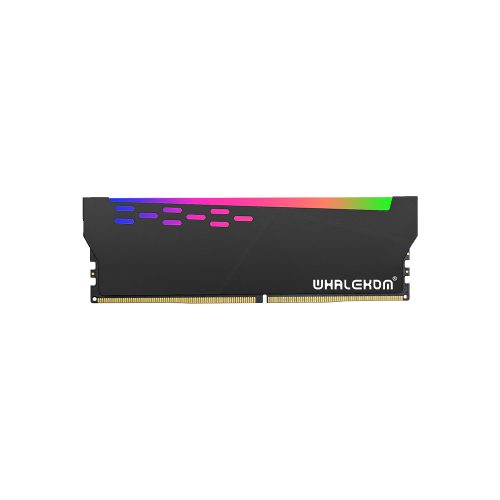
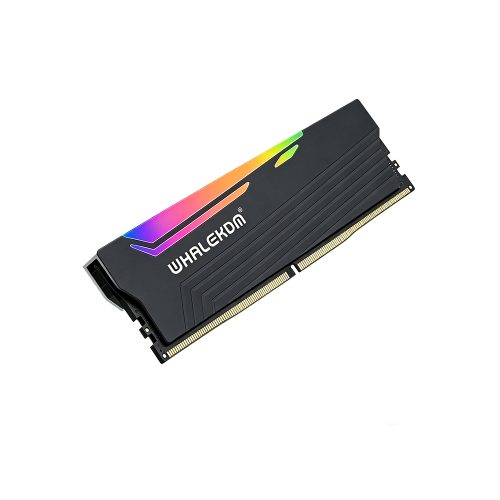
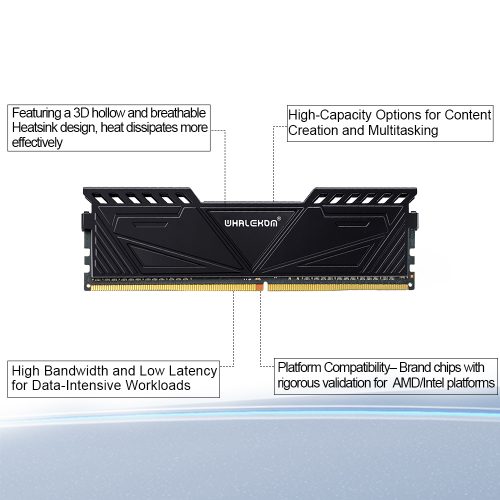
WHALEKOM DDR4 Heatsink 32GB 3200MHz is a high-density DDR4 UDIMM module featuring a 3D hollow and breathable heatsink design for more effective heat dissipation. Built for content creation, heavy multitasking and workstation workloads, it delivers high bandwidth and low latency for data-intensive tasks, with rigorously validated brand chips for full compatibility with both AMD and Intel platforms.
When a 32GB Module Is the Right Choice
| Your situation | Choose | Reason |
| Two-slot board, need 64GB | 2×32GB | The only way to reach it. No alternative exists in DDR4. |
| Four-slot board, need 128GB total | 4×32GB — but read the downclock section first | Only configuration reaching that density |
| Four-slot board, need 64GB | 2×32GB, not 4×16GB | Same capacity, two slots left free, lighter electrical load |
| Two-slot board, need 32GB | 2×16GB, not 1×32GB | Cheaper per GB and dual-channel. See the 16GB page. |
| Confirmed this machine gets no further upgrades | Whatever fits your target in one purchase | Slot scarcity makes incremental buying unattractive |
Note the pattern: the 32GB module wins when slots are the constraint, not when budget is the constraint. If you have free slots and are cost-sensitive, two 16GB modules will usually beat one 32GB module on price per gigabyte. The 32GB module charges a premium for density, and you should know exactly what you are buying it for.
The Downclock Trap: Why 4×32GB Can Be Slower Than 2×32GB
This is the part most buyers discover too late, and it is arithmetic rather than opinion.
A 32GB DDR4 U-DIMM normally ships as 2Rx8 — two ranks of eight x8-wide chips, sixteen packages total. Each additional rank adds electrical load to the memory controller’s command and address lines. When you populate all four DIMM slots with dual-rank modules, eight ranks are hanging off a controller designed to be comfortable with far fewer.
Firmware responds by prioritising signal integrity over frequency. The module that was validated at DDR4-3200 trains at DDR4-2666 instead. There is no error message and usually no warning — the machine just runs with less bandwidth than you paid for.
Core Features of the DDR4 Heatsink 32GB
Aluminium Heatsink Suited to Density-Driven Heat
Thermal behaviour is not linear with capacity. Packing sixteen DRAM packages onto one module concentrates heat sources in a small area, and sustained sequential work — large writes, long encoders, VM memory ballooning — keeps all of them active for minutes at a time rather than in bursts. That is where a heatsink earns its cost on a high-density module, more than it does on an 8GB stick.
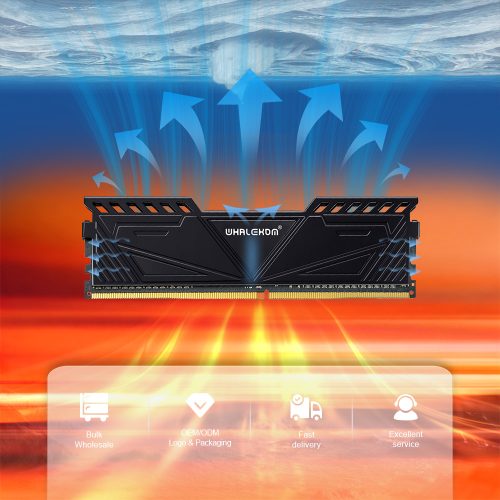
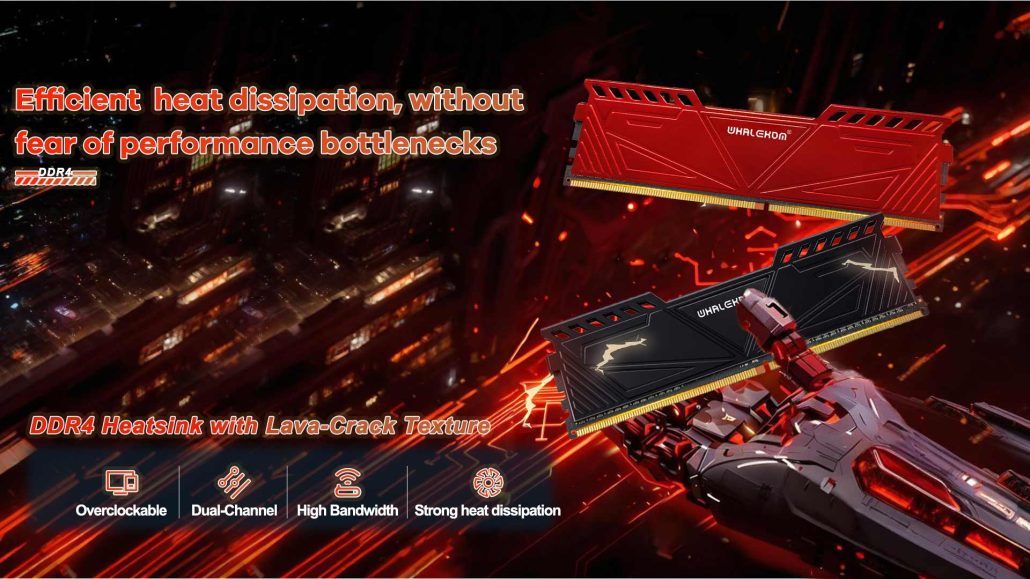
The CNC aluminium alloy vest draws heat off the packages through direct PCB contact and into whatever case airflow exists. The design stays low-profile, so it clears tower coolers and SFF shrouds instead of forcing you to choose between a big CPU cooler and populated memory.
In fairness: at JEDEC 1.2V with reasonable airflow, even a dense module stays within its operating range — which is 0℃ to +85℃ per this module’s specification. The heatsink is margin, not a requirement. But margin is what prevents the intermittent, difficult-to-reproduce instability that appears after eighteen months of thermal cycling, particularly in machines that live in warm rooms or sealed cabinets.
2666-4000MT/s with One-Click XMP 2.0
Boots at JEDEC 2133/2666 baseline, reaches rated speed via the Intel XMP 2.0 profile in UEFI. All four speed grades are validated as dual-rank modules — tested as they ship, rather than extrapolated from a single-rank sample.
At DDR4-3200 in dual-channel, theoretical peak is 51.2 GB/s. Whether you get there depends on slot population as described above; check your QVL rather than assuming the headline.
Built to JEDEC DDR4
Compliant with the official JEDEC DDR4 standard (JESD79-4) on a 288-pin U-DIMM substrate at 1.2V nominal (up to 1.35V under XMP). DDR4’s selectable bank group architecture allows separate activate, read, write and refresh operations to proceed in parallel across groups, which is part of why dense DDR4 scales better under mixed workloads than its prefetch and clock figures alone suggest.
Every module passes full functional testing and burn-in before packing.
Full Specifications
| Model Name | DDR4 Heatsink 32GB 3200MHz | Interface | 288-pin U-DIMM (Non-ECC, Unbuffered) |
| Speed | 2666~4000 MT/s | Capacity | 8GB / 16GB / 32GB |
| Input Voltage | 1.2V (XMP 1.35V) | Application | Workstation, Content Creation |
| Heatsink Material | Aluminum Alloy | Warranty | 3 Years |
| Dimensions | L133.8mm * W42mm * H8mm | XMP Support | XMP 2.0 |
| Storage Temp. | -20℃ ~ +100℃ | Operating Temp. | 0℃ ~ +85℃ |
Ideal Applications
The 32GB module is for builds where capacity per slot carries real weight:
- Mini-ITX workstations that must reach 64GB from a two-slot board
- Content creation at 4K and above — video timelines, multi-cam editing, large compositing jobs
- Virtualisation hosts running several VMs concurrently on a consumer platform
- Local AI inference workstations where small models must fit entirely in system memory
- Engineering and simulation desktops — CAD assemblies, CFD pre-processing, large structural models
- Long-lived office workstations specified so they will not need touching again for several years
Need less density for considerably less money? Try the DDR4 Heatsink 16GB. Repairing an existing machine rather than expanding it? The DDR4 Heatsink 8GB is likely sufficient. Prefer visible lighting over clearance? Compare the DDR4 RGB Gaming RAM 32GB XMP.
FAQ
Can I run four 32GB DDR4 modules for 128GB?
Physically yes on a four-slot consumer board that supports 32GB-per-slot densities, giving 128GB total. Be aware of the trade: populating all slots with dual-rank modules usually triggers a firmware downclock, commonly from DDR4-3200 to DDR4-2666, which reduces theoretical peak bandwidth by about 17% (51.2 GB/s down to 42.7 GB/s at dual-channel widths). Acceptable for capacity-bound workloads; not for bandwidth-bound ones.
Is 2×32GB better than 4×16GB?
For most builds, yes. Both reach 64GB, but 2×32GB uses two slots instead of four, leaves two slots free for future expansion, and halves the number of ranks hanging off the memory controller — which makes reaching rated XMP speed considerably more likely. Choose 4×16GB only if you already own those modules or your board’s QVL specifically favours that population.
Why is my 32GB module running below its rated speed?
The two usual causes are full slot population with dual-rank modules , and an outdated UEFI that predates high-density support. The fix for the first is accepting the downclock or reducing population; the fix for the second is a BIOS update, which frequently resolves unrecognised or mis-trained high-density modules.
Will a 32GB DDR4 UDIMM work in an older DDR4 motherboard?
Often, but not reliably enough to assume. Boards released early in the DDR4 timeline were sometimes qualified against densities available at the time, and update their support through later BIOS revisions. Always check the manufacturer’s QVL — the 32GB row, specifically — and update to the latest firmware before concluding the module is incompatible.
Is buying high-density DDR4 still worth it versus moving to DDR5?
Usually yes if you already own a working DDR4 CPU and motherboard: reaching a capacity target with modules costs far less than replacing CPU, board and memory together. It stops being the better deal when you need high capacity and high bandwidth at once, when your required capacity exceeds your board’s supported configuration, or when you were replacing the CPU anyway. We cover this judgement in detail above rather than just recommending you buy more memory.
Does a 32GB module generate noticeably more heat than a 16GB one?
Marginal in total, but more concentrated. A denser board pattern puts sixteen DRAM packages in the same physical space, so heat is generated in a smaller area matters more than the raw wattage suggests. Under sustained load in a case with limited airflow, this is the capacity tier where we consider a heatsink most defensible.
-1-500x500.jpg)